

CrescentLink has always been built to answer one question well: where are your network assets, and how are they connected?
Cable routes, connections, splice points—the physical layer of a fiber network has had a reliable home in CrescentLink for years.
But physical locations and physical assets have never been the whole story. Every service a fiber operator delivers, whether it be business, residential, ITS, SCADA, or otherwise, runs on a specific path through that physical network. Tracking that path, the strands, the wavelengths, the connections between them, and the service riding on top of it, has meant stepping outside CrescentLink.
Spreadsheets, static diagrams, assignment tables that were never built to hold this kind of detail. The same tools operators were trying to get away from in the first place.
That gap ends with Service Suite.
What Service Suite Does
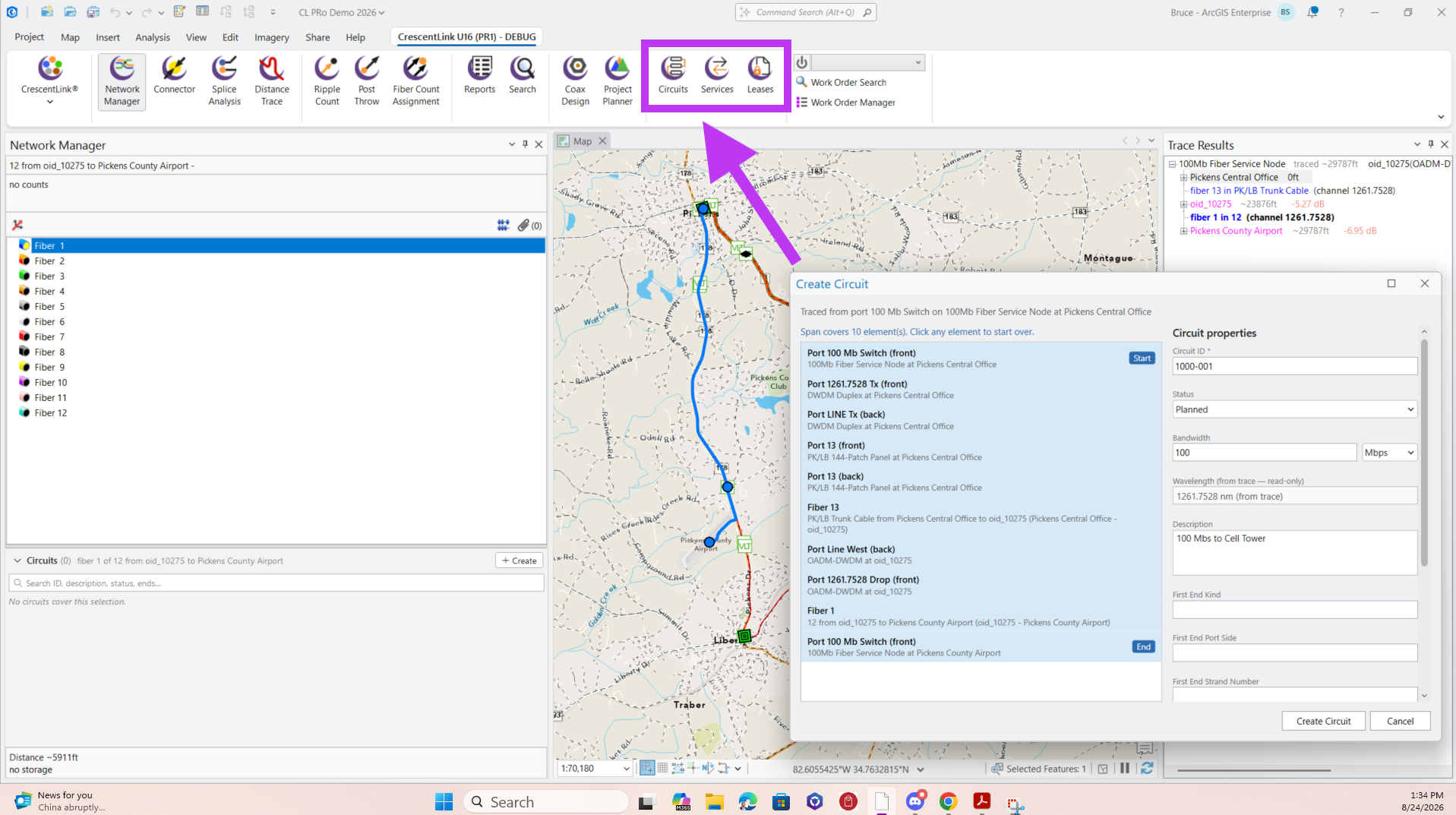
Service Suite is a combination of features that add in the functionality needed to create and manage the logical layer of the network, interfacing it directly with the physical layer that the platform already manages.
In this context, Service Suite will give users the ability to create Circuits, Services, and Leases.
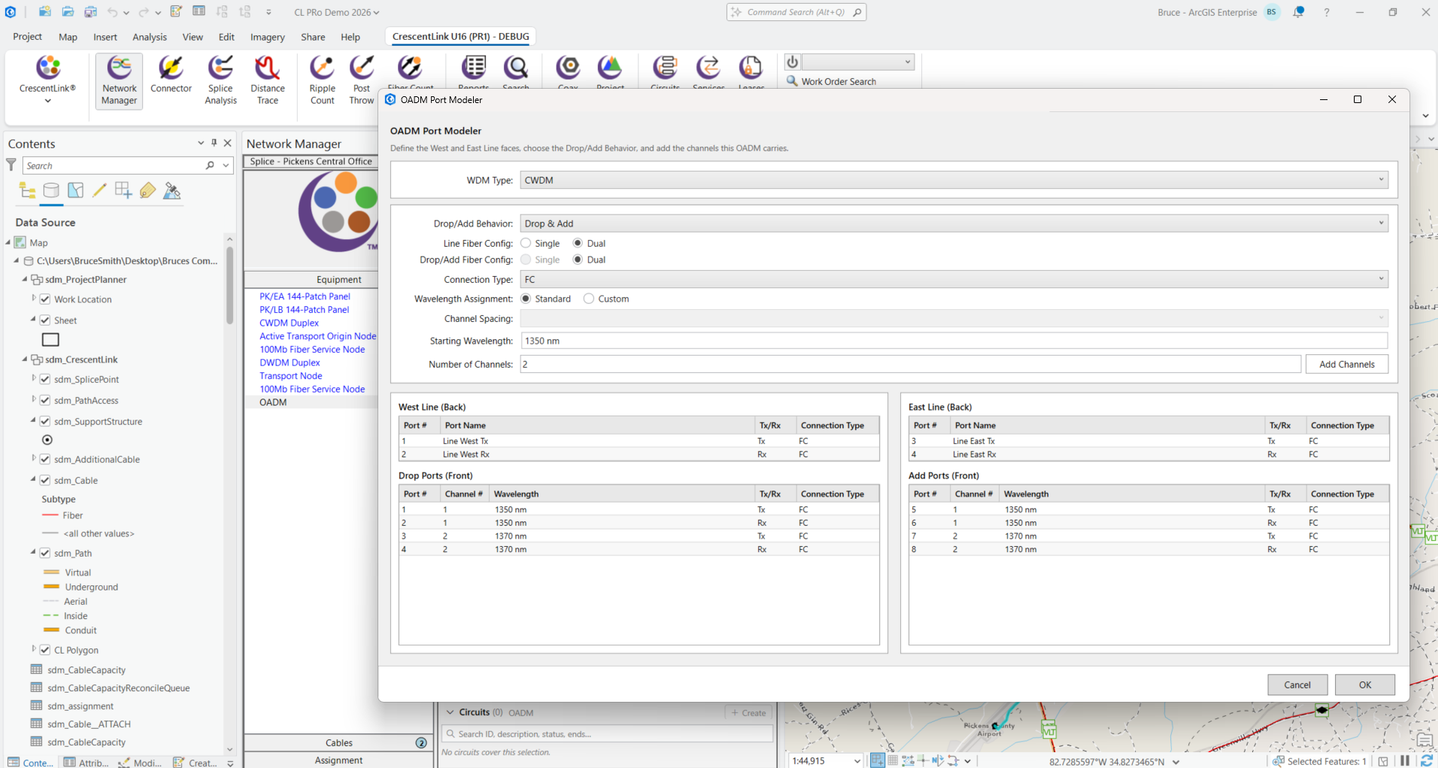
Circuits are defined as a connected pathway between an A and Z location. This pathway can be a physical connection on strands, or you can create pathways using newly released wavelength modeling.
Leases will allow users to report who is using or purchasing their assets. Leases will define the end user and any contractual obligations that may be included.
Services are what an organization is offering. Services like bandwidth delivery, dark fiber leases, or reservations can all be used to designate a Service. All of these new features combine to give detailed physical and logical information to the end user in a single source of truth.
The result is a single interface to build and connect the services running throughout your network, manage them individually, as well as how they’re linked to the physical infrastructure carrying them, and report on the entirety of the logical layer.
Why This Matters
Managing a fiber network already means juggling multiple systems. Physical infrastructure in one place, services, circuits, and leases in somewhere else entirely. Every time that information has to move between systems, there’s a chance for something to get entered incorrectly, get missed, or simply not get documented at all.
Service Suite will close that gap. Instead of maintaining a separate system outside of your GIS system of record to track what services run where, operators can manage that information in the same platform they already rely on for the physical network.
One source of truth, covering both the physical path and the service it delivers.
What This Means for Daily Operations
For operators, the ROI is two-fold. First, this means eliminating the need to move between different systems to get a complete picture of a service and its physical path. Second, the GIS remains the single source of truth and trusted repository for all pertinent information related to your network. Query, trace, and report on circuits directly inside CrescentLink, down to the level of individual strands and wavelength channels, without leaving the platform to piece the rest together.
What to Know Before You Adopt
Service Suite will require an update to the CrescentLink database schema, and works with ArcGIS Pro 3.7 and .NET 10. This update is required to use the new functionality, and it is not something we’re asking customers to figure out alone. GEOGRAPH will assist with this update at no additional cost.
At GEOGRAPH, we take pride in solving your problems with real world solutions. We understand your networks, and we strive to deliver the most up to date technologies for you and your organization. Our success is and always has been tied to the success of our customers. We look forward to supporting you both now and in the future.