

The GEOGRAPH User Conference 2026 brought together 88 attendees from 53 organizations for two days in Greenville, South Carolina.
The room included network operators, GIS managers, and field teams from broadband providers, electric cooperatives, and municipal networks across the country, all working through the same question in different ways: how do you keep your network data accurate and useful as your network keeps growing?
Below are the key themes and takeaways from this year’s conference.
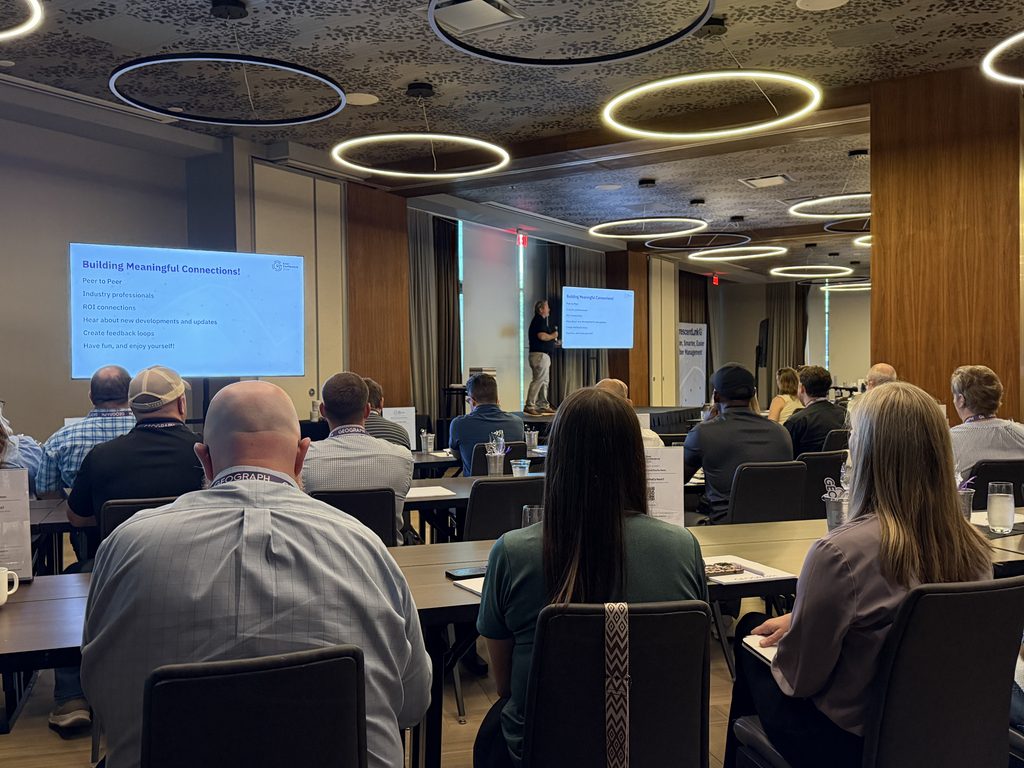
Setting the tone: connection over presentation
Bruce Smith, GEOGRAPH’s CEO, opened the conference with a look at what UC is meant to be and why. His message was straightforward. The conference is designed to help people connect, not just to GEOGRAPH, but to each other.
Fiber professionals across the country are solving a lot of the same problems in isolation. Bruce made the case that some of the most valuable time at UC happens between sessions, when someone facing a problem has a chance to sit down with someone else who solved that exact problem last year.
Networking was the theme in both senses of the word, fiber networks and the people who run them.
That framing set the tone for the rest of the conference.
Sessions mattered, but so did the conversations happening around them.
State of Technology: where CrescentLink stands and where it’s headed
Jasen Kintner, GEOGRAPH’s CTO, walked through CrescentLink changes over the past year and the strategy shaping what comes next.
Since our last UC, the team shipped three CrescentLink for Pro updates, including Update 14 built for ArcGIS Pro 3.7 and .NET 10, with a deliberate focus on predictability and product quality.
GEOGRAPH also completed more than 30 data migration projects and kept an active back and forth with Esri’s leadership and product teams throughout the year, working through technical issues together rather than waiting on release notes.
Jasen also covered what is coming from Esri itself: ArcGIS Pro 3.6 and 3.7 are out, ArcGIS Enterprise 12.0 and 12.1 have released, and Esri is investing further in GeoAI and embedded assistants. ArcGIS Web AppBuilder is set to retire in Q2 2027, and the National Spatial Reference System is due to modernize in 2027 as well. Esri’s pace of change can be intimidating, but the team at GEOGRAPH tracks it closely so customers don’t have to.
Jasen also shared GEOGRAPH’s own support strategy moving forward. CrescentLink will be certified on every other ArcGIS Enterprise long term support release and standardizes on odd numbered ArcGIS Pro releases. This gives customers a predictable multi-year upgrade path with fewer environment changes and less operational risk along the way. It is a deliberate trade, giving up being first on every new Esri release so we can provide stability customers can actually plan around.

Service Suite: the next chapter for CrescentLink
The biggest news out of this year’s conference was the announcement of Service Suite, a new set of tools coming to CrescentLink that gives fiber operators direct visibility into the logical layer of their network, not just the physical one.
Jasen led live demos walking through what Service Suite looks like in practice. Attendees got a first look at Circuit Manager, Service Manager, and Lease Manager, and saw how the toolset connects circuit paths, service records, and lease data directly to the network data teams already manage in CrescentLink.
As of the time of this post, Service Suite is coming soon. For the full breakdown of what it includes and how it works, read the announcement post: Introducing Service Suite.
The state of broadband in South Carolina
Jim Stritzinger, Director of the SC Broadband Office, gave the keynote which looked at where broadband access in South Carolina actually stands today, and how its growth is indicative of the current landscape of fiber broadband access in America.
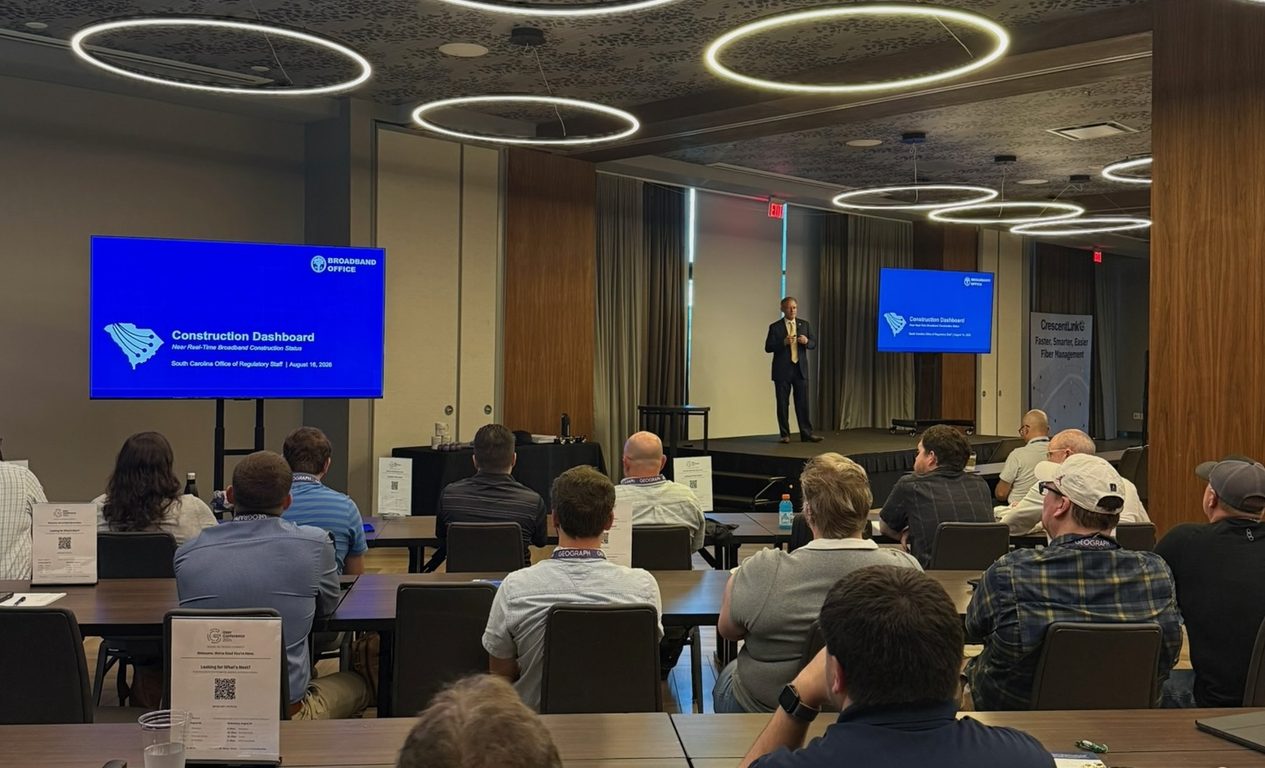
South Carolina has directed more than $1 billion in broadband infrastructure funding since 2020, and between June 2022 and December 2025, fiber coverage expanded dramatically across the state. Large stretches that were previously marked as underserved or unserved are now built out. DSL, meanwhile, is on its way out entirely.
South Carolina is also punching above its weight nationally. The state ranks near the top for BEAD cost efficiency, both nationwide and across the Southeast, with one of the lowest costs per location and among the fewest remaining unserved locations left to close. According to Ookla, South Carolina is the only state in the country where rural broadband access now outperforms urban access.
The keynote’s closing question stuck with the room: now that the digital divide is closing, what comes next? For network operators, this question changes the conversation from building initial access to maintaining and growing a network that is expected to consistently work.
Tech Talk tables
Back by popular demand, our Tech Talk tables at the end of each conference day provided an opportunity for attendees to sit down directly with GEOGRAPH team members and work through whatever was actually relevant to their own network.
The tables were organized by topic, so people could go straight to what they needed. One table covered ArcGIS Pro questions, including geodatabase schema issues and migrating off ArcMap. Another covered ArcGIS Enterprise and services, including Web Experience upgrades and versioning. GEOGRAPH Academy had a table for training and learning paths, Customer Experience covered account questions, and one table let attendees get hands on with the new Service Suite ahead of its release.
It is one of the better parts of the conference format. Sessions are built for a general audience by necessity, but a lot of the most useful conversations happen when someone can ask about their specific setup. The Tech Talk tables give people that space without needing a scheduled one on one.
Achievement Award: MEC
This year’s GEOGRAPH Achievement Award went to Midwest Energy & Communications (MEC). Using CrescentLink alongside other tools built into ArcGIS Pro, MEC built out a stronger way to identify and resolve network outages, while also giving field technicians a better system for documenting network infrastructure and equipment on site.
The result is a team that can find problems faster and trust the records they are working from, whether they are troubleshooting from the office or standing in front of the equipment itself. The award recognizes that kind of practical, everyday value, not a flashy feature, just a team using their data better than they were before.

Looking ahead
This year’s conference reinforced something GEOGRAPH has always believed: the software is only half the story. The other half is the people using it, and the people around them doing the same work. That is what Bruce’s opening was about, and it is what MEC’s award and the Tech Talk table conversations proved out over two days.
With Service Suite on the way, the next several months are about bringing the logical layer into CrescentLink the same way the physical layer has always lived there. Attendees left with a preview of that work.
If you want to plan ahead and make sure you are part of next year’s User Conference, click over to the User Conference page and sign up for early updates.
Interested in Service Suite?
Read more about what it includes and when it is coming: Introducing Service Suite.